
- letterhead with your Practice Logo
- a standard greeting
- a reusable sign-off
- opening hours or contact details
- appointment preparation instructions
- booking links
- privacy or recall wording your team has already reviewed
Template Components are used in Email Templates. SMS Templates do not use
Template Components, because SMS messages are purely text-based.
How Components fit with Templates
A Template Component is one reusable part of an Email Template. It does not send anything to patients by itself. For example:- Letterhead is a Template Component.
- Birthday Email is an Email Template.
- A Broadcast or Automation sends the saved Email Template to patients.
Open Components
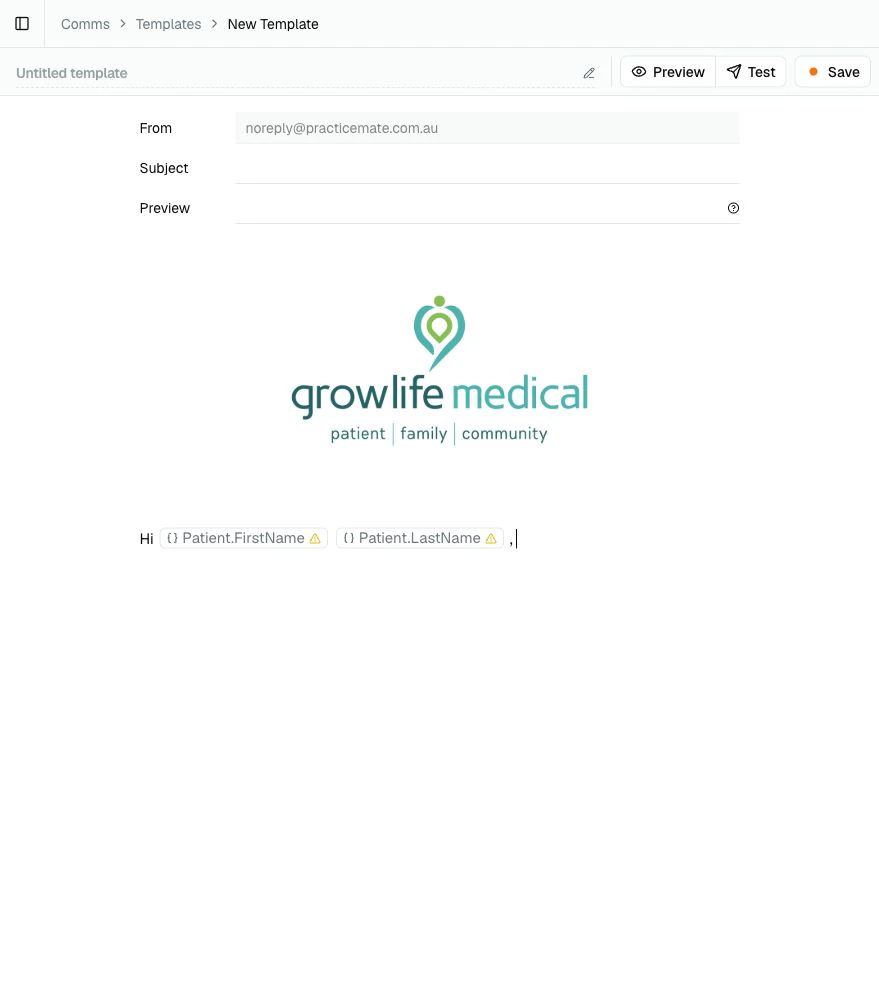
In the sidebar, under Comms, select Components. The Components page shows reusable Email blocks saved by your practice. The Letterhead Template Component below is a simple example with a Practice Logo and greeting.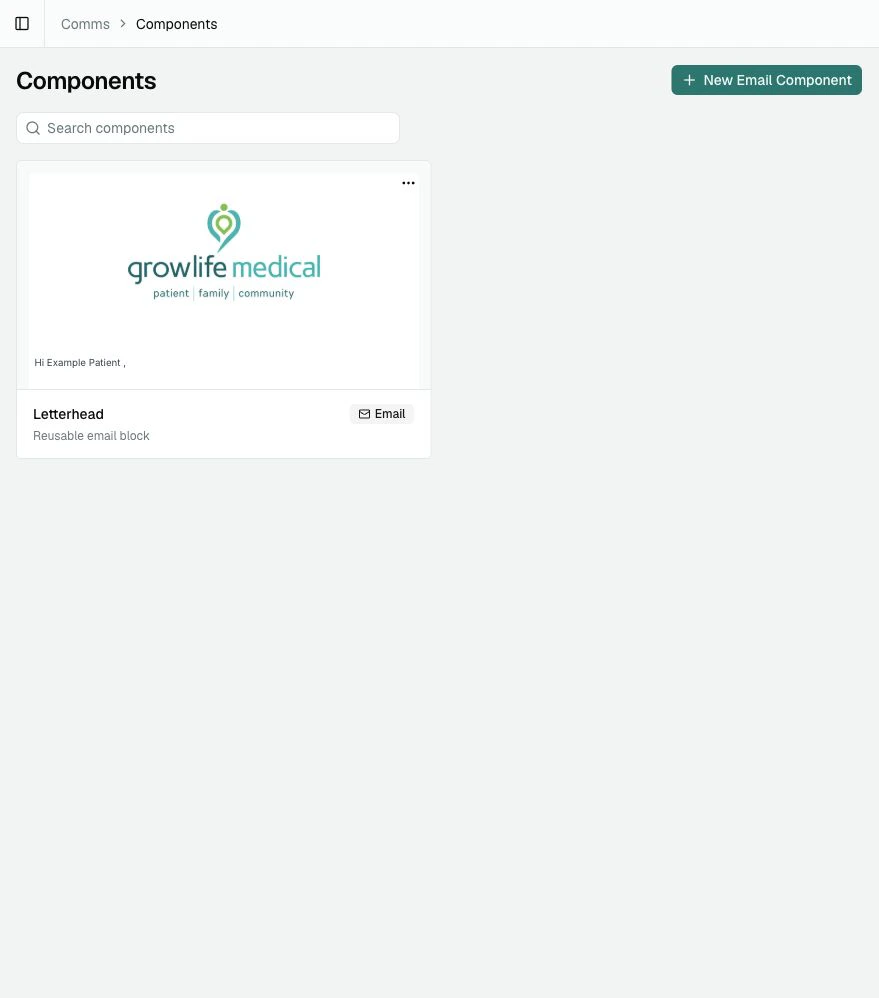
Create a Template Component
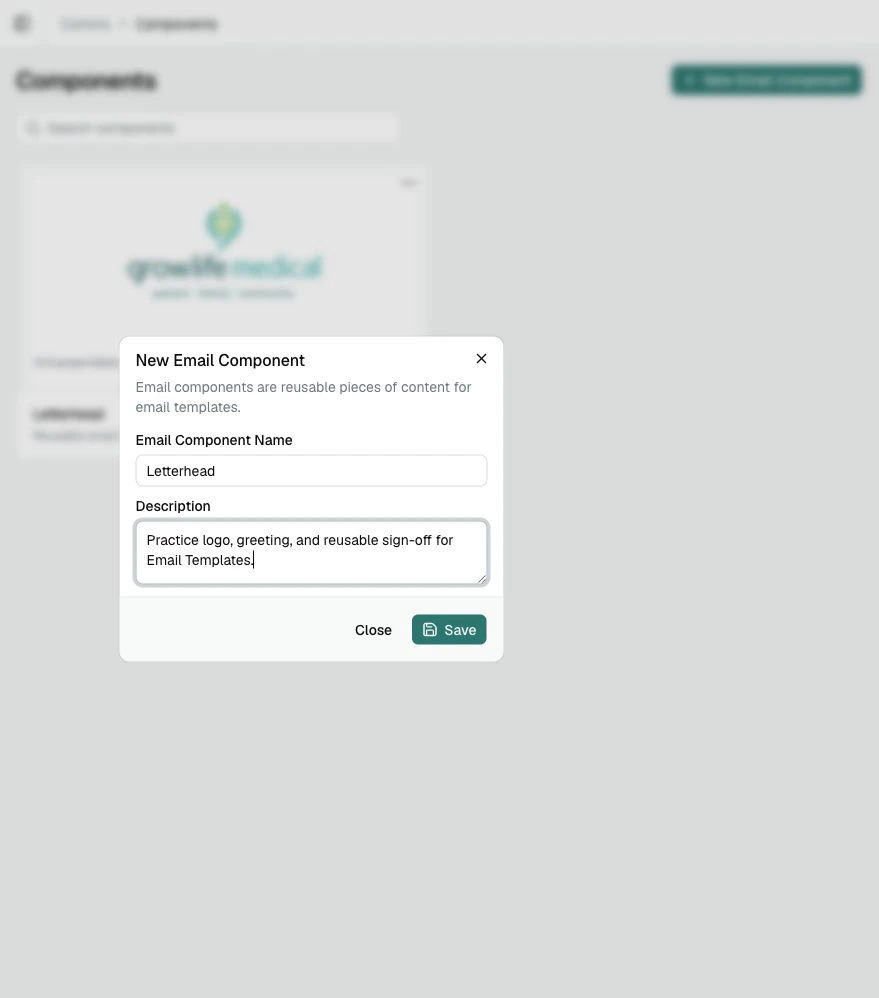
Select New Email Component. Enter a clear name and a short description. The name helps your team find the Template Component later, and the description helps explain when to use it. For example:- Name: Letterhead
- Description: Practice logo, greeting, and reusable sign-off for Email Templates.
Build the Template Component
The Template Component editor works like the Email Template body editor. You can type normally, add Template Variables with @, and add blocks with /. After a Template Component is created, edits in this editor save as you work. If you are making several changes, pause for a moment before leaving the page so the latest edits have time to save. The Letterhead example includes a Practice Logo and Template Variables for the patient’s name.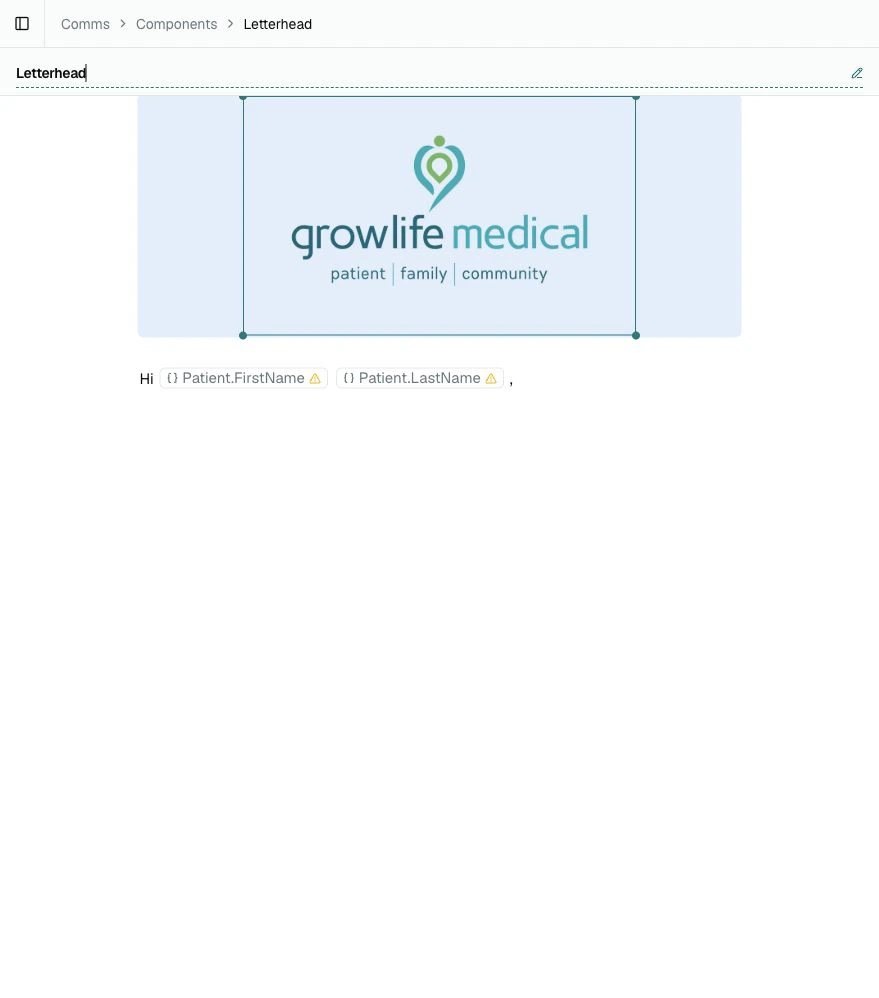
Add a Template Component to an Email Template
Open the Email Template where you want to use the Template Component. Click into the Email body, type /, then either scroll to Components or start typing the Template Component name.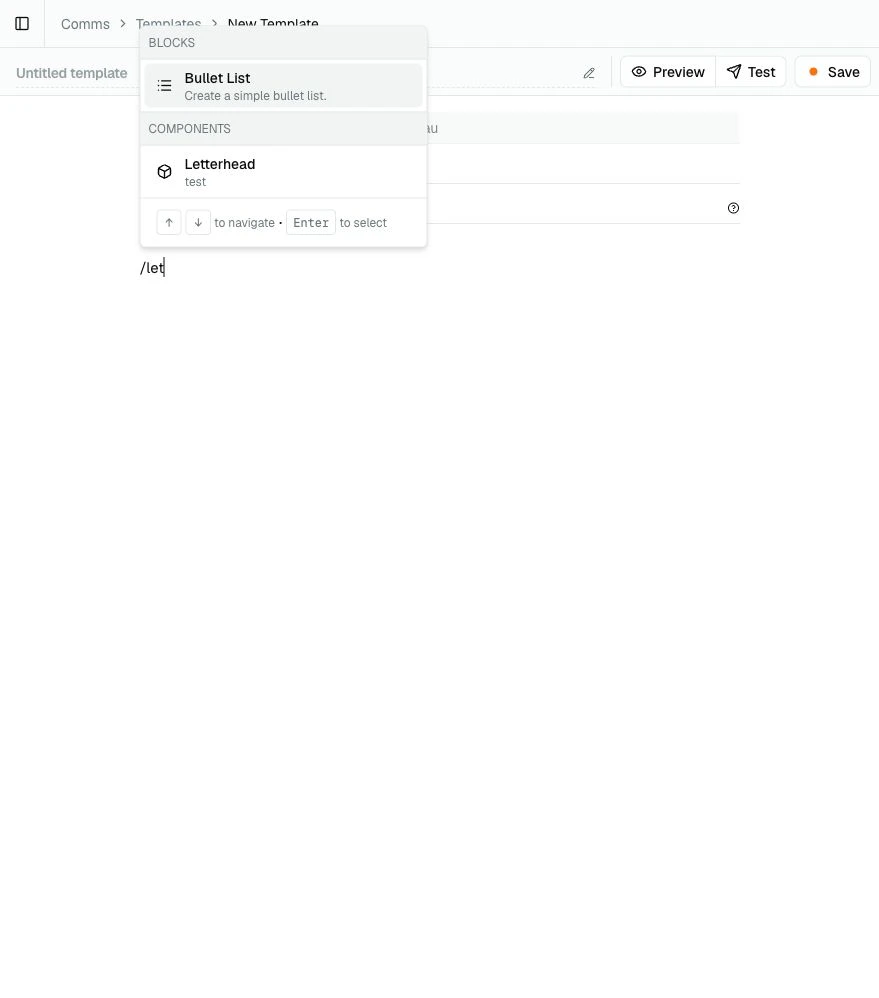
Updating a Template Component
When you edit a Template Component, the updated version is available the next time your team inserts it into an Email Template. Existing Email Templates are not quietly rewritten when a Template Component changes. Once a Template Component is inserted, its content becomes part of that Email Template. If you want an existing Email Template to use the updated wording or layout, open that Template and update the inserted content there.Duplicate or delete a Template Component
Use the … menu on a Template Component card when you need to duplicate or delete it. Duplicating is helpful when you want a close variation, such as a different letterhead for a particular kind of Email. Deleting removes the saved Template Component from the Components page, but it does not remove content that has already been inserted into existing Email Templates.A reliable way to build
1
Choose one repeated block
Start with something your practice uses often, such as a letterhead, footer,
or booking link.
2
Name it clearly
Use a name your team will recognise later, such as Letterhead or
Appointment Booking Link.
3
Keep it focused
Put only the reusable part in the Template Component. Write the
patient-specific message in the Email Template.
4
Use Template Variables carefully
Add variables where they make the message warmer or clearer, and add
fallbacks when a missing value would read awkwardly.
5
Insert it into an Email Template
Use the / menu in the Email Template body, then choose the Template
Component from Components.
6
Preview and test the full Email Template
Check the complete Email Template before using it in a Broadcast or
Automation.
A good Template Component saves your team time without making the Email feel
generic. It should sound like a familiar part of your practice’s own
communication style.
What you learned
You learned how to:- open Components
- create a new Email Component
- name and describe a Template Component
- build reusable content with the Email editor
- use Template Variables inside a Template Component
- insert a Template Component into an Email Template with the / menu
- understand what happens when a Template Component is updated later